
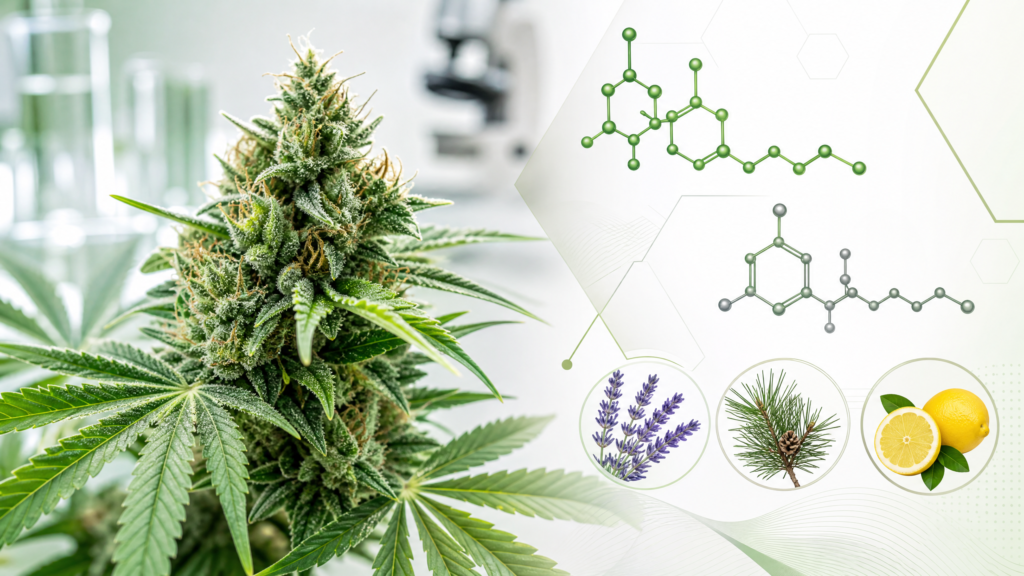
Cannabis is an incredibly diverse plant. Two varieties may look similar at first glance yet produce noticeably different aromas, growth characteristics, cannabinoid profiles, and consumer experiences.
For anyone learning about cannabis, understanding where these differences come from is more useful than simply memorizing strain names. Genetics, cannabinoids, terpenes, cultivation conditions, and individual biology all contribute to how a particular cannabis variety develops and how its effects may be perceived.
Here are some of the most important concepts behind modern cannabis strains.
What Is a Cannabis Strain?
The word “strain” is widely used to distinguish one cannabis variety from another. Names such as Northern Lights, Blue Dream, or Sour Diesel help consumers and growers identify varieties associated with particular genetic backgrounds and characteristics.
However, a strain name should not be treated as a precise scientific specification.
Plants sold under the same strain name can differ depending on the breeder, phenotype, cultivation environment, harvest timing, storage conditions, and other factors. This is one reason cannabis education increasingly focuses on measurable characteristics alongside familiar strain names.
Resources such as PrimeStrains can be useful starting points for exploring cannabis strains and learning about the characteristics commonly associated with different varieties.
Genetics Are the Starting Point
Every cannabis plant inherits genetic characteristics from its parent plants.
Breeders selectively cross plants to encourage desirable traits, which can include aroma, cannabinoid production, plant structure, flowering behavior, resilience, or appearance. Seeds produced from these crosses contain genetic variation, meaning individual plants from the same lineage are not necessarily identical.
This is where the concept of a phenotype becomes important.
A phenotype is the observable expression of a plant’s genetics interacting with its environment. Several seeds from the same cross can therefore produce plants displaying somewhat different traits.
Cultivators sometimes perform “phenotype hunts,” growing multiple plants from the same genetic line and selecting individuals that express the characteristics they want to preserve.
Indica and Sativa Don’t Tell the Whole Story
Cannabis education has traditionally divided strains into three broad categories:
- Indica
- Sativa
- Hybrid
Consumers are often told that indica strains are relaxing while sativa strains are energizing, with hybrids falling somewhere between the two.
While these labels remain common and can provide historical or commercial context, they shouldn’t be considered reliable predictions of a person’s experience.
Modern cannabis genetics have undergone extensive crossbreeding. Two products carrying the same broad classification may have substantially different chemical profiles.
Looking at cannabinoids and terpenes can therefore provide additional useful information.
Cannabinoids: More Than THC
Cannabis produces compounds known as cannabinoids.
THC, or tetrahydrocannabinol, is the cannabinoid most strongly associated with cannabis intoxication. CBD, or cannabidiol, is another widely recognized cannabinoid and does not produce the same intoxicating effects as THC.
But cannabis contains numerous other cannabinoids, including compounds such as CBG and CBC.
Their concentrations can vary substantially between plants.
This chemical variation is one reason two cannabis products with similar THC percentages shouldn’t automatically be expected to produce identical experiences.
THC percentage is useful information, but it represents only one part of a much larger chemical profile.
Terpenes Give Cannabis Its Aroma
Open a container containing two different cannabis varieties and the difference can sometimes be immediately obvious.
One might smell citrusy and bright. Another could have earthy, pine-like, floral, fruity, or fuel-like aromas.
Much of this aromatic diversity comes from compounds called terpenes.
Common cannabis terpenes include:
Myrcene — often associated with earthy or herbal aromas.
Limonene — commonly associated with citrus aromas.
Pinene — associated with pine-like scents.
Linalool — often described as floral.
Caryophyllene — commonly associated with peppery or spicy aromas.
Terpenes aren’t exclusive to cannabis. They occur throughout the plant kingdom and contribute to the characteristic aromas of many herbs, fruits, flowers, and trees.
The terpene profile of cannabis can vary according to genetics as well as cultivation, harvesting, drying, curing, and storage.
Environment Matters Too
Genetics establish a plant’s potential, but the growing environment influences how that potential is expressed.
Factors such as light, temperature, nutrients, water, humidity, growing medium, and plant stress can affect development.
Post-harvest handling matters as well.
Drying, curing, and storage conditions can influence aroma and overall product quality. Even genetically identical plants can therefore develop differently when grown or processed under different conditions.
This interaction between genetics and environment helps explain why cannabis cannot always be understood from a strain name alone.
Why Strain Research Is Useful
Learning about cannabis strains can help consumers develop a better vocabulary for comparing products.
Instead of relying entirely on labels such as “indica” or “sativa,” someone researching cannabis can consider several pieces of information together:
- Genetic lineage
- Cannabinoid profile
- Dominant terpenes
- Aroma and flavor characteristics
- Cultivation information
- Laboratory testing, where available
This approach provides a more complete picture of a cannabis product.
It also makes strain databases and educational resources particularly useful. They allow people to compare varieties, investigate genetic relationships, and become familiar with the terminology used throughout cannabis culture.
Individual Experiences Still Vary
Perhaps the most important lesson in cannabis education is that individual responses aren’t perfectly predictable.
A strain description represents general information, not a guarantee of how every person will respond.
Dose, tolerance, consumption method, individual physiology, product composition, and environment can all influence someone’s experience.
For this reason, descriptions such as “uplifting,” “relaxing,” or “creative” are better understood as reported or commonly associated characteristics rather than promises.
A Better Way to Understand Cannabis
Cannabis is considerably more complex than the traditional indica-versus-sativa distinction suggests.
Genetics establish the foundation. Growing conditions influence how those genetics are expressed. Cannabinoids and terpenes contribute to the plant’s chemical profile, while individual biology influences the consumer’s experience.
Understanding these factors makes it easier to appreciate why thousands of cannabis varieties exist and why seemingly similar strains can sometimes be quite different.
For people interested in exploring the subject further, researching individual strain histories and comparing their genetics, cannabinoids, terpenes, and reported characteristics can provide a much more informative perspective on cannabis diversity.
Cannabis laws vary by jurisdiction. This article is intended for general educational purposes and should not be considered medical or legal advice.
Source: https://primestrains.com

